

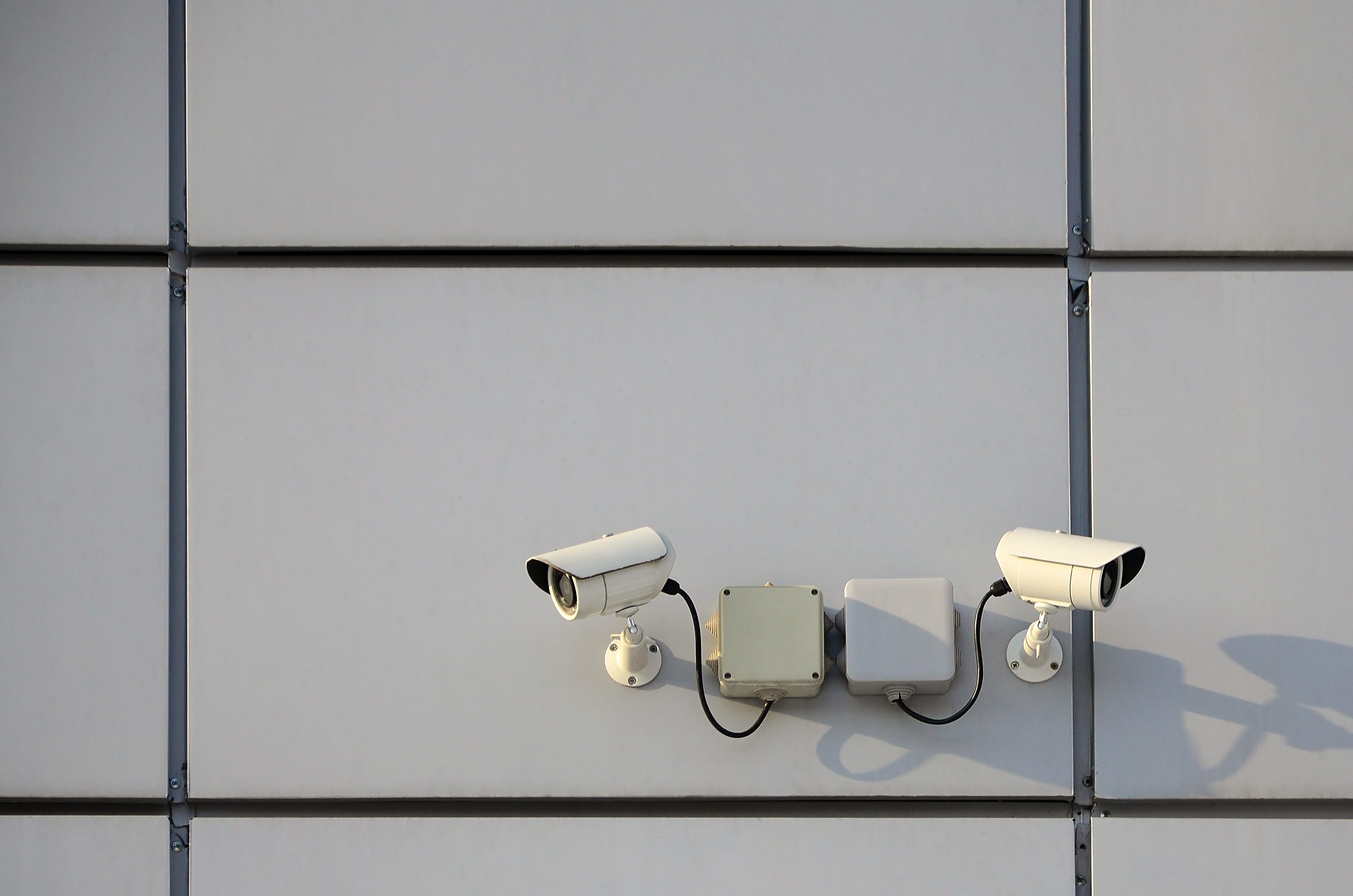
If you hear people laughing when you walk into a restaurant, you might feel worried: Is my hair messed up? Is there a stain on my shirt? These minor insecurities fall far short of paranoia. Paranoia, like most body-mind disorders, exists on a spectrum. The examples I just mentioned lie at the normal end of the continuum. At the other end of the spectrum, people experiencing severe paranoia may feel persistent and intense mistrust or suspicion of others. Those experiencing psychosis may develop persecutory delusions, such as believing the FBI is tapping their phones.
Most of us are unaware of the extent to which we’ve consented to governments accessing our electronic messages. How ironic that, in fact, and without your knowledge, your emails, texts or telephone calls may be tapped.
The major technology and telecom companies regularly publish, update and distribute their privacy policies. But who takes the time to read them?
Clicking “agree” on a lengthy user agreement hardly means most of us understand the extent to which our information may ultimately be disclosed. These companies' policies generally make clear that information may be disclosed when required by applicable law or valid legal process.
This is a slippery slope. Many exceptions exist. Recent events make the concern less hypothetical. Lawmakers are currently seeking an investigation into the Trump administration's use of administrative summonses to obtain records involving journalists and nonprofit organizations—sometimes without judicial approval. When government surveillance reaches people engaged in journalism, protest or other constitutionally protected activity, the line between irrational suspicion and legitimate concern becomes considerably harder to draw. And, remember, because of your electronically signed user agreements with these firms, you may not know you’re being surveilled.
Speaking of surveillance and real versus imagined paranoia, the technology company Flock Safety manufactures automated license-plate readers (ALPRs). These can identify the make, model, and color of vehicles, allowing records of any particular one to be linked to a specific place and time. According to the American Civil Liberties Union (ACLU), Flock operates more than 120,000 automated license-plate readers nationwide. Its system generates more than 20 billion vehicle/plate scans per month across thousands of American communities.
Flock is anything but covert about its objectives. The company plans to deploy their technology in cities across the country. When you then add all that you’ve been reading about artificial intelligence (AI) into the mix, fears of government surveillance begin to sound considerably less irrational. AI algorithms allow for instantaneous analysis of information garnered from Flock’s ever multiplying cameras.
Flock’s AI algorithms can examine patterns of vehicle movement and potentially identify behavior deemed “suspicious” well before law enforcement suspects an individual or launches an investigation against any particular individual.
It’s old news that Flock could determine:
Where was Alan’s car Tuesday evening?
What’s new, and worrisome, is that Flock’s AI-enhanced surveillance system can specifically search for:
Which vehicles display this particular pattern of behavior?
The system can identify patterns of association, repeated locations, travel between cities, visits to particular institutions, etc. As far as we know, Flock does not yet produce a comprehensive dossier of every American. But the combination of ubiquitous sensors + historical location data + powerful AI analysis creates a surveillance power far exceeding that of any isolated police camera.
Furthermore, these surveillance powers can reveal sensitive patterns—where you live, work, visit, or where you go to church, temple or mosque. It can identify physicians you consult and which political events you attend. Flock claims governments have no “back door” access to such information. Law enforcement sharing is “off,” by default. Flock claims that ICE cannot directly access its system. However, company officials acknowledge, it previously conducted pilot programs with several federal agencies, including the FBI, ATF, Homeland Security Investigations and Customs and Border Protection. Flock says those pilots have ended. Critics, nevertheless, argue that the larger network still permits federal agencies to obtain information indirectly through participating local agencies.
The larger issue here is what it means for us global citizens that a private company like Flock created an immense, interconnected surveillance infrastructure that government agencies can use.
The firm has created a disturbing public/private arrangement. The US government need not spend money to construct a centralized national surveillance network itself. Thousands of local police departments and private entities can already purchase cameras whose data can, “under certain circumstances,” be searched or shared across jurisdictions.
In fairness, local police departments claim that ALPRs are valuable for finding stolen vehicles, locating abducted people, identifying suspects and solving serious crimes. Flock emphatically rejects the characterization of its product as a national mass-surveillance database and emphasizes auditing, access controls and relatively short data-retention periods.
Nonetheless, considering how the current presidential administration has weaponized the US Department of Justice, we Americans, as well as anyone interested in a government “by the people, for the people,” are well served by understanding these threatening invasions into our private lives. Equally dire circumstances already occur regarding AI itself. It, too, proliferates within private technological ecosystems more powerful than many governments. William Dalrymple1 describes how the British government spent nearly a century dismantling the East India Company. Regarding how US anti-trust laws could rein in firms like Google or Apple, he concludes:
The instruments still exist. What is lacking is the political nerve to use them.
The larger danger is not that Flock, or any single company, has created George Orwell’s 1984. It is that the technological infrastructure required for unprecedented surveillance is increasingly being built by private companies before Americans have decided what limits should govern its use.
Tools developed to find stolen cars or identify suspects can serve legitimate public-safety purposes. But history gives us ample reason to be cautious whenever governments acquire powerful surveillance capabilities, particularly when those capabilities can reveal where people travel, with whom they associate, what institutions they visit and which political activities they attend.
Paranoia is the irrational belief that someone is watching you.
The uncomfortable question today is what happens when the technology makes watching you remarkably easy.
Enjoying this newsletter? Consider a free subscription and share it with a friend.
And check out my book, Lover, Exorcist, Critic: Understanding Depth Psychotherapy, available on Amazon.
References
Dalrymple, W. What it took to dismantle the most powerful company in the world. New York Times, published August 28, 2026.
Google. (2026). Privacy policy. Google Privacy & Terms
Verizon. (n.d.). Data transfers FAQs. Verizon Privacy Policy