

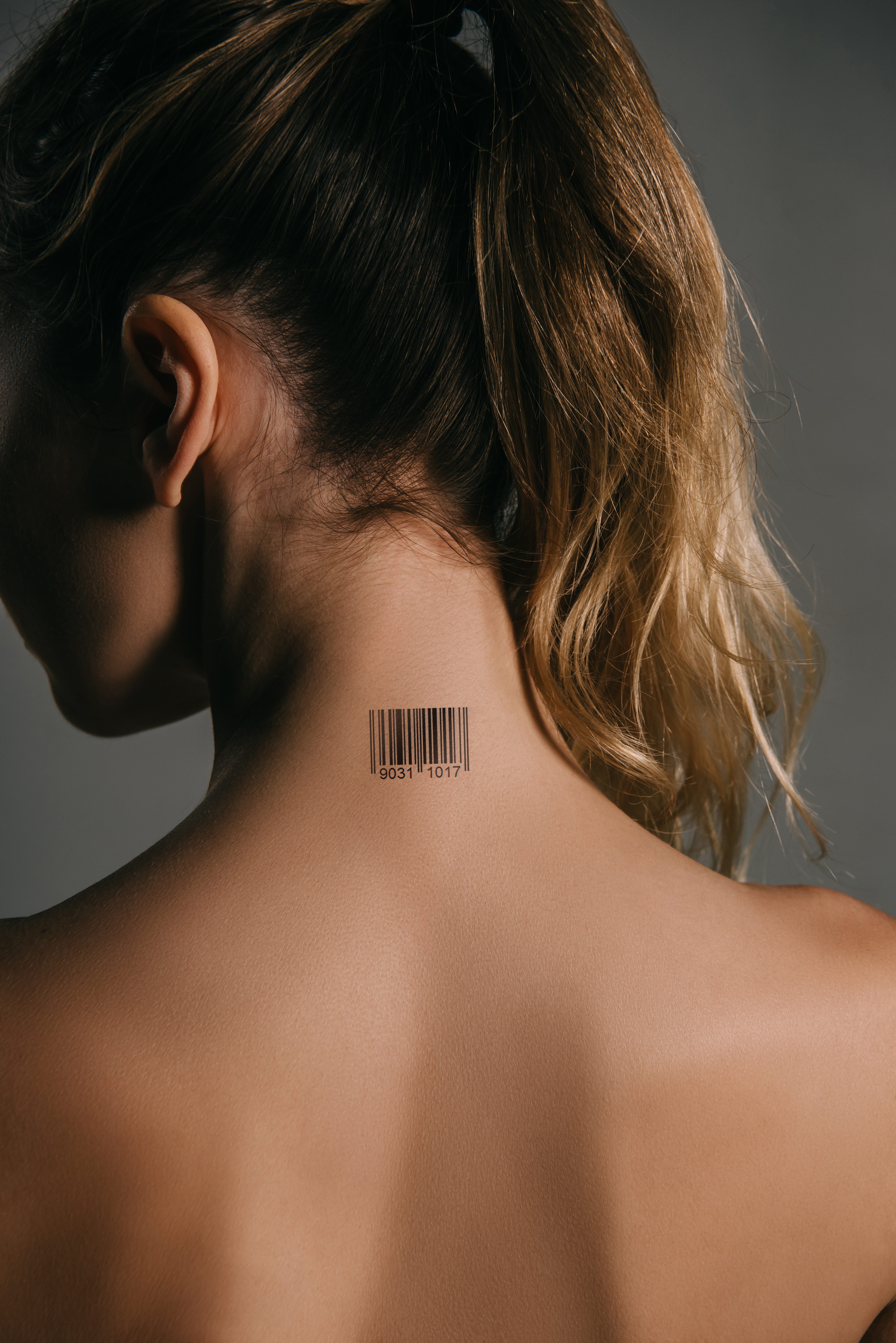
The United States remains an outlier among wealthy nations in its failure to guarantee health coverage to everyone. At the same time, evidence that American citizens have become increasingly valuable as exploitable commodities surrounds us. Massive corporations compete not merely for our money, but for our attention, our behavior, our data, and our minds.
Google, Microsoft, Walmart, Amazon, and Apple increasingly dominate parts of our daily lives. The accelerating artificial intelligence systems these corporations develop promise extraordinary benefits. They also create sophisticated ways to capture our attention, predict our behavior, and influence what we see.
Healthcare offers another version of the same problem. Americans can pay exorbitant premiums for high-deductible coverage and still encounter treatment restrictions, months-long waits for appointments, and difficulty coordinating care. Physicians themselves are working within systems that dictate how much time they can spend with patients and what care can be provided. A basic human need has become a complicated commercial enterprise.
These dark forces converge in the omnipresent smartphone.
Even health insurers and medical providers now require us to navigate apps, portals, passwords, verification codes, automated menus, and digital forms simply to obtain human care.
The phone has become a powerful symbol of the digitization of human experience. British novelist Will Self described our increasing inability to look away from screens as the “tyranny of the virtual.”1
Many of us know the feeling. We reach for the phone without deciding to. We interrupt conversations to look at it. We bring it to dinner, to bed, and (let’s admit it) to the toilet.
It resembles an addiction.
So how do we cope with this increasingly Kafkaesque effort to digitize—and commodify—more of human life?
Contemporary psychoanalytic thinking identifies several mature or adaptive defense mechanisms, including suppression, anticipation, altruism, sublimation, and humor.2 Rather than simply disconnecting us from an uncomfortable reality, these defenses can help us tolerate it. Anyone who isn't experiencing panic daily uses some combination of these. (And, then there’s always the less adaptive denial, disavowal, and dissociation, discussed in last week’s essay). In other words, we push our fears down, slide them into the future, or channel them into good deeds or productive work.
Humor is particularly useful.
It allows us to recognize something disturbing without either denying it or becoming completely overwhelmed by it.
So, in the spirit of psychological health, I offer several ways to confront smartphone domination:
When passing someone walking down the street with their neck craned toward a screen, softly mutter, “Don’t be a phone zombie.” A low voice is recommended to avoid altercations.
Watch Invasion of the Body Snatchers periodically as a reminder of what may lie ahead.
When fantasizing about beating your phone to bits with a hammer, allow yourself to enjoy the fantasy. Then put the hammer away.
If your phone falls into a toilet, notice the speed with which you become willing to thrust your hand into circumstances you would ordinarily find unthinkable. Consider what this reveals about your relationship with technology.
If you land in an emergency room because you tripped over a curb while staring at your phone, assuming you are not seriously injured, try laughing at yourself. You may soon be joined by others. Think of the future business for cervical spine specialists!
Finally, anyone who dictates texts should appreciate that artificial intelligence has already developed an excellent sense of humor.
You dictate:
Love you!
Your phone sends:
Fuck you!
Or you dictate to your lover:
Meet you at the hotel at five.
And Siri decides:
Meet you in hell at five.
Perhaps Siri knows something you don’t.
Of course, our increasingly compulsive relationship with smartphones is not merely funny. Look around… or look at yourself, including yours truly. These devices have become deeply integrated into how we work, communicate, shop, date, navigate, entertain ourselves, receive medical care, and understand the world.
That gives the corporations controlling much of this technology extraordinary access to something more valuable than our money: our attention.
Marx used the concept of “commodity fetishism” to describe the way commodities can appear to possess value and power independent of the human relationships that produced them.3 Modern consumer culture has extended this dynamic in ways Marx could scarcely have imagined. We do not merely purchase objects. Increasingly, our attention and behavior have themselves become commercially valuable.
And now AI raises the stakes further. Technology can anticipate what might interest us, frighten us, entertain us, anger us, or keep us staring at a screen.
That deserves serious scrutiny.
But seriousness does not require solemnity.
Sometimes humor allows us to look directly at something absurd without pretending it isn’t happening. We can recognize our own participation in it. We can laugh at ourselves. And perhaps, in that moment of laughter, we create just enough psychological distance to ask a useful question:
Do I really want to keep doing this?
So the next time you find yourself standing in the middle of a room, staring at a six-inch screen while the actual world continues around you, feel free to mutter:
Don’t be a phone zombie.
Quietly, for now.
Enjoying this newsletter? Consider a free subscription and share it with a friend.
And sign up to pre-order my new book, The Psychoanalyst as Revolutionary — out December 3.
References
Self, W. (2018). The printed word in peril: The age of Homo virtualis is upon us. Harper’s Magazine, 337(2021).
Freud, A. (1936). The Ego and the Mechanisms of Defense. London: Routledge.
Marx, K. (1988). Economic and Philosophical Manuscripts of 1844. M. Milligan (Trans.). New York: Prometheus. (Original work published in 1844).